leave a message
leave a message
If you are interested in our products and want to know more details,please leave a message here,we will reply you as soon as we can.
Submit

Blog

Home

Blog

  • Yujie Industrial will guide you through understanding what PCR, GRS, OBP, and UL2809 are
    Yujie Industrial will guide you through understanding what PCR, GRS, OBP, and UL2809 are
    Jan 09, 2026
    Mr. Shi from Yujie Industrial, a leading plastics supplier, was invited to participate in a live broadcast on Plus.com, where he discussed the development and business opportunities of the PCR industry with Dr. Zhang. During the broadcast, Mr. Shi shared the reasons for the rise and current status of the PCR industry, analyzed potential market opportunities and bottlenecks, recounted Yujie's efforts, trials, and achievements, and expressed his vision for future development. Finally, he and Dr. Zhang called on more businesses to fulfill their social responsibility, pay attention to the PCR industry, reuse misused resources, and jointly protect our green planet.     Recently, more and more manufacturers, traders, and brand owners have begun to pay attention to PCR, GRS, UL2809, an...
    Read More

  • Yujie Industrial RPP (PCR-PP Recycled Polypropylene pellets) innovation and application in Clothes Hanger Products
    Yujie Industrial RPP (PCR-PP Recycled Polypropylene pellets) innovation and application in Clothes Hanger Products
    Jan 03, 2026
    Yujie Industrial's RPP (PCR-PP/recycled polypropylene pellets) is a compliant and environmentally friendly raw material in IKEA's sustainable supply chain, compatible with its procurement standards for plastic parts.  Yujie Industrial's innovative PCR materials and application cases have all passed GRS global recycling standards, OBP Ocean Bound Recycled plastics certification, and IATF16949 automotive quality system certification. Its technological achievements help clients meet the requirements of the EU's Circular Economy Action Plan (CEAP). For example, the PCR material project in cooperation with IKEA reduced carbon emissions by 2.4 tons per ton of product, becoming a recommended case by the United Nations Environment Programme (U...
    Read More
  • Recycled Polypropylene (Post consumer recycled PP) PCR PP Plastic Raw Materials at the Filament and Fiber Grades Modification and Application
    Recycled Polypropylene (Post consumer recycled PP) PCR PP Plastic Raw Materials at the Filament and Fiber Grades Modification and Application
    Jan 03, 2026
    Yujie Industrial recycling of discarded takeout containers, resulting in the modification and application of Recycled PP pellets (PCR-PP Post consumer recycled PP granules) , a key plastic raw material. The Recycling Journey of Takeout Containers: From White Pollution to Recycled Polypropylene Granules Comparable to Raw Materials.   Polypropylene can be classified into five categories according to processing requirements: Film Grade, Injection Grade, Pipe Grade, Fiber Grade, and Yarn Grade. In PCR-PP applications, the first three are well-established, with relatively standardized processes and widespread application, resulting in high familiarity. The latter two are used only in specific scenarios and fields, requiring different processing techniques for different products....
    Read More
  • What are Bio-based Materials
    What are Bio-based Materials
    Jan 16, 2026
    Bio-based materials are materials prepared from renewable biomass (plants, microorganisms, waste oils, etc.) through bioconversion, chemical synthesis, or physical processing. Bio-based products are wholly or partly derived from materials of biological origin (such as plants, animals, enzymes, and microorganisms, including bacteria, fungi and yeast). Their core characteristics are low carbon, renewability, and partial biodegradability. They are used to replace petroleum-based materials, aligning with "dual carbon" (carbon dioxide, oil, and gas) and green supply chains. I. Core Concepts and Common Confusions - Bio-based ≠ Biodegradable: Bio-based depends on the source of the raw materials (renewable); biodegradable depends on whether it is decomposed by microorganisms after disposal (...
    Read More
  • What is Ocean Bound Plastic
    What is Ocean Bound Plastic
    Jan 20, 2026
    OBP (Ocean Bound Plastic) refers to environmentally friendly raw materials made from recycled plastic waste within 50 kilometers of the coastline that has not entered the sea. The core categories are OBP-PE/PP/PET/PA/PC/ABS, emphasizing low carbon footprint and traceability. Marine plastic debris (OBP) refers to plastic waste that "poses an eventual loss to the ocean." It is estimated that marine plastic debris accounts for 80% of all marine plastic waste. It includes: A small portion of commercially recyclable plastic waste   A large portion of non-commercially recyclable plastic waste   I. Core Definition and Classification - Definition: Recycled plastic waste from within 50 kilometers of the coastline (including beaches, estuaries, and near-shore fisheries), processed throug...
    Read More
  • What is PCR plastic
    What is PCR plastic
    Jan 19, 2026
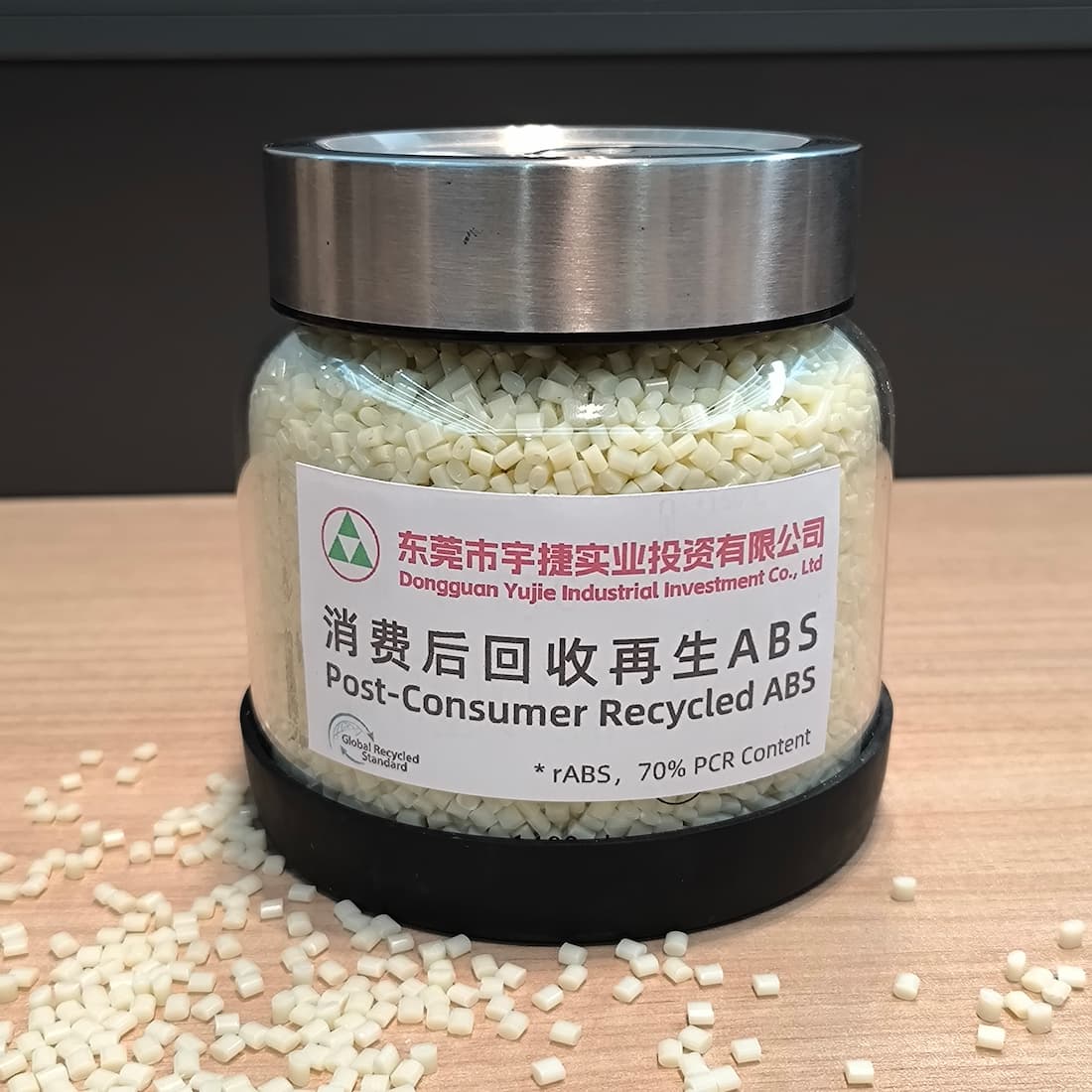
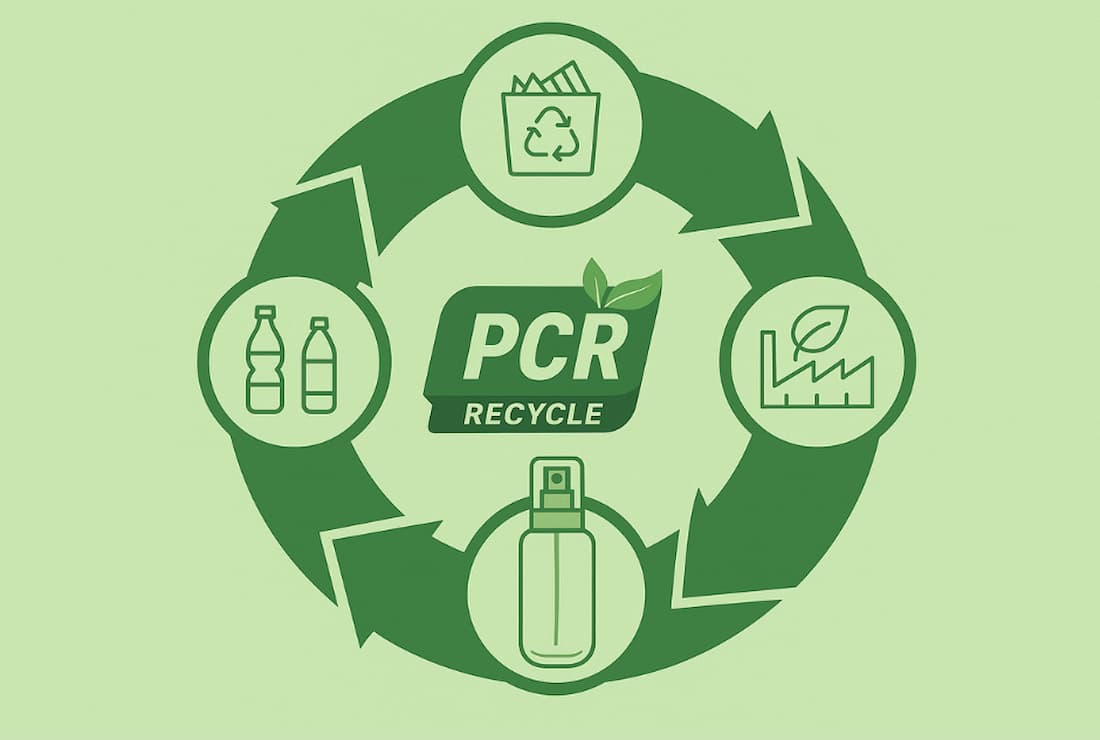
    PCR plastic short for Post-Consumer Recycled Plastic, refer to plastic materials made from recycled consumer plastic waste through processes such as sorting, washing, crushing, and granulation. This effectively reduces plastic pollution and the use of virgin plastics. - Core Advantages: Strong environmental attributes, reducing carbon footprint and petroleum resource consumption; some modified PCR materials have performance close to virgin materials, offering better cost-effectiveness; aligns with global trends of "plastic reduction" and "carbon neutrality," meeting the sustainable development needs of brands. - Common Categories: Mainstream types include PCR PP, PCR PE, PCR PET, PCR ABS, and PCR PC, suitable for various processing techniques such as injection molding, blow molding, and...
    Read More
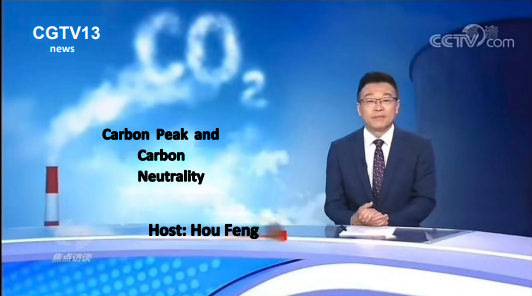
  • Yujie Industrial PCR Environmentally Friendly Modified Plastics Contribute to Carbon Peak Achievement
    Yujie Industrial PCR Environmentally Friendly Modified Plastics Contribute to Carbon Peak Achievement
    Jan 27, 2026
    In September 2020, China explicitly proposed the goals of "carbon peaking" by 2030 and "carbon neutrality" by 2060, advocating a green, environmentally friendly, and low-carbon lifestyle. These dual carbon goals accelerate the pace of carbon emission reduction, which is conducive to guiding green technology innovation and enhancing the global competitiveness of the country's industries and economy. In June 2022, the Guangdong Provincial People's Government issued the "Implementation Plan for Carbon Peaking in Guangdong Province," which proposed promoting carbon peaking actions in the petrochemical industry and promoting the application of technologies and equipment such as raw material optimization, material recycling, and process reengineering. Recently, the "Interpretation of the Plan...
    Read More

leave a message

leave a message
If you are interested in our products and want to know more details,please leave a message here,we will reply you as soon as we can.
Submit
Contact Us:13030895350@163.com

Home

Products

whatsApp

Email