
William Chen
+86 18250853801
leave a message
If you are interested in our products and want to know more details,please leave a message here,we will reply you as soon as we can.


FAQ
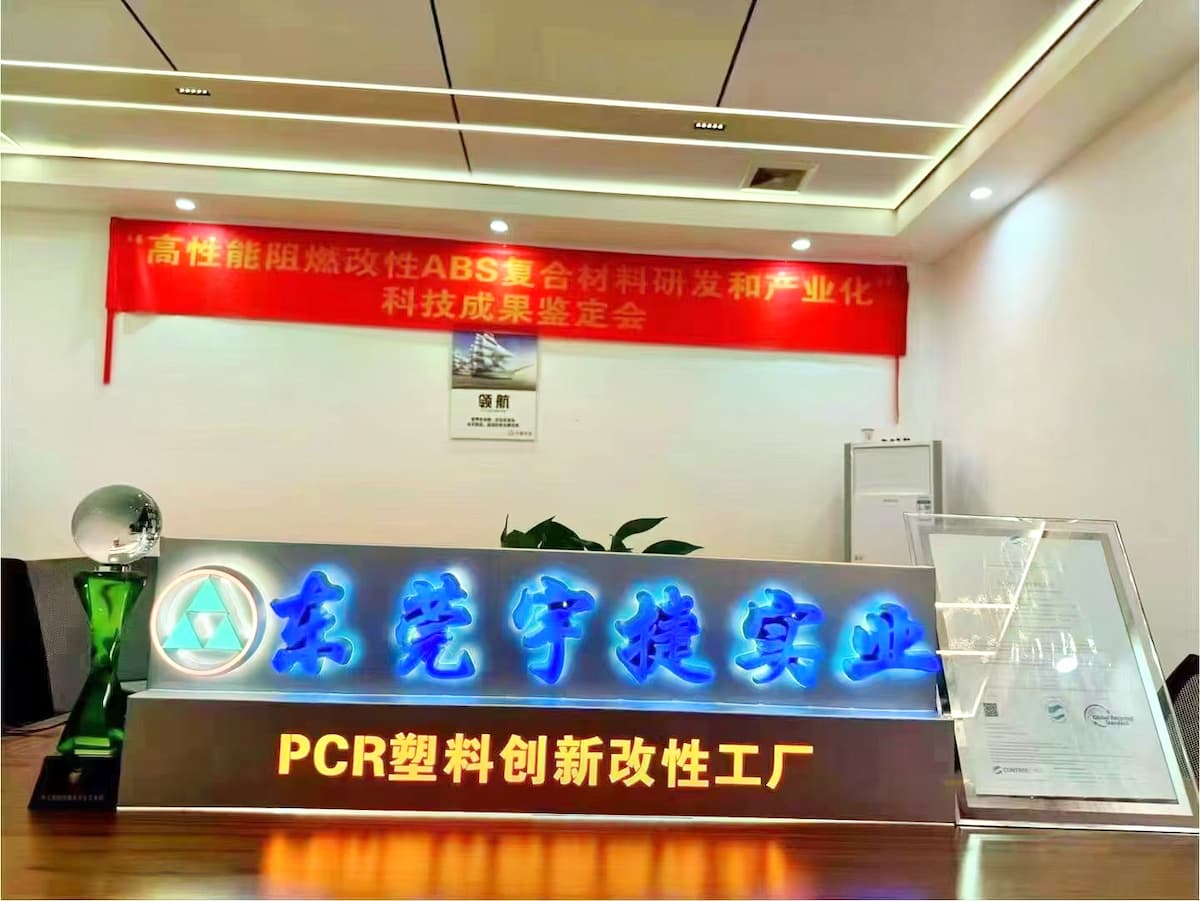
Dongguan Yujie Industrial PCR plastic materials focuss on their reliable product quality, strong technical capabilities, comprehensive certifications, and adaptability to diverse industry needs.
The specific reasons are as follows:
1. Superior Product Quality and Comprehensive Variety: Their PCR products cover mainstream plastic types such as RPP and RABS, with performance comparable to virgin materials. For example, their recycled PCR polypropylene boasts a drop strength 1.8 times that of virgin material and remains resistant to cracking even at -30 degrees Celsius. The company has an annual production capacity of 50,000 tons, with two factories and 16 production lines, ensuring a stable supply for large-scale orders.
2. Strong Technical Strength: As a national high-tech enterprise and a Guangdong Province specialized and innovative enterprise, they have been deeply involved in plastic modification for over 20 years, holding nearly 20 invention patents and participating in the formulation of group standards for new material applications. They also innovatively use plant fibers as material fillers, producing more stable and environmentally friendly PCR plastics suitable for various application scenarios.
3. Comprehensive Certifications for Multiple Scenarios: The products have passed international recycling certifications such as GRS, ISCC, and OBP, and also comply with ISO series quality system standards and IATF 16949 automotive management system certification. Core products have also passed relevant hazardous chemical tests and meet US FDA and European LFGB food standards, making them suitable for automotive parts, appliance casings, and food contact packaging.
4. Abundant and Reliable Partnerships: With its superior products and services, it has served well-known brands such as IKEA,Walmart,TTI,TARGET, Xiaomi, and Deli, and its business covers Europe, America, and Southeast Asia. Its PCR materials help partners easily comply with environmental policies and even help Amazon sellers obtain green labels to expand into overseas markets.
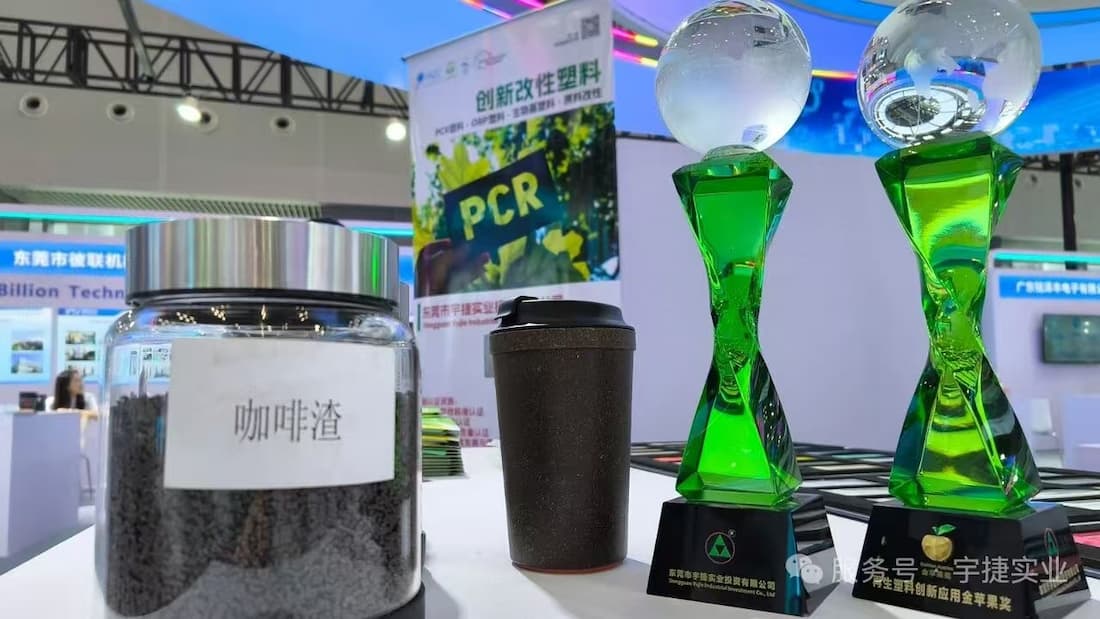
PCR means Post Consumer Recycled. GRS.OBP.UL2809 certification.
PIR refers to Post-Industrial Recycled Plastics.
While both PIR and PCR (Post-Consumer Recycled Plastics) belong to the category of recycled plastics, they differ significantly in raw material sources, processing difficulty, and other aspects. The specific differences are as follows:
1. Raw Material Sources: PCR comes from discarded plastics after consumer use, such as mineral water bottles, used plastic tableware, and discarded plastic toys. The sources are diverse and widespread. PIR comes from factory scraps, injection molding regrind, and defective products. The recycling channels are fixed, and it only circulates within the factory.
2. Processing Difficulty: Due to the diverse sources, PCR requires meticulous sorting of different plastic materials and deep cleaning to remove various stains and impurities. The processing is complex and technically demanding. PIR has a simpler composition and fewer impurities. It can usually be re-granulated after simple crushing and cleaning, making the processing simpler.
3. Material Quality: The performance and quality of PCR fluctuate greatly between different batches, resulting in poor quality stability. PIR has strict quality control at the production source, ensuring stable quality. The performance of recycled PIR is closer to that of virgin material.
4. Environmental Protection and Market Value: PCR significantly reduces household plastic waste entering the environment, aligning with global plastic reduction policies, thus possessing greater environmental significance and market value. PIR focuses on the recycling of industrial raw materials; while also environmentally friendly, it primarily helps companies reduce production costs, with its environmental impact relatively limited to the industrial sector.
5. Application Scenarios: PCR is often used to manufacture products with less stringent performance requirements, such as daily chemical packaging, express delivery bags, and recycled textile fabrics. PIR is suitable for high-end electronic components, precision injection molded products, and other applications requiring high material performance and precision.

 IPv6 Network Supported
leave a message
Scan to Wechat/Whatsapp :